
Navigating the steel market in India can feel like trying to predict the weather, can’t it? One day prices are steady, and the next, you’re wondering what happened. As a project manager or a homeowner planning construction, getting a grip on steel rates for brands like Jindal Panther, SAIL, and Goel TMT is crucial for your budget. This article is your friendly guide. We’re going to break down the complex world of steel pricing in 2026, not with confusing jargon, but with clear, actionable insights. Let’s dive into what’s really driving the costs and how you can make smarter purchasing decisions.
What Are Steel Rates and Why Do They Fluctuate?
Let’s start with the basics. When we talk about “steel rates,” we’re primarily referring to the market price of TMT bars and structural steel—the skeleton of modern construction in India.
Now, why does the price tag keep changing? Think of it like the price of vegetables. If there’s a great harvest (high supply), prices might drop. If a festival creates high demand, prices might rise. Steel is the same, but on a global scale. Prices fluctuate due to a constant tug-of-war between:
- Global Factors: International raw material costs and import-export policies.
- Domestic Factors: Local demand from infrastructure projects and domestic production levels.
It’s this dynamic interplay that causes the numbers on your screen to shift.
Key Factors Driving Steel Rate Fluctuations in India
So, who are the main characters in this story of rising and falling prices? Here’s a look at the key players.
Supply and Demand Imbalance
This is the fundamental law of economics in action. Right now, you might be hearing about oversupply—where Indian mills are producing more steel than the market immediately needs. This naturally softens prices. On the flip side, if there’s a demand slowdown in construction or automotive sectors, prices can stagnate. But here’s the big counter-force: the Government of India’s massive infrastructure spending on projects like highways and smart cities creates a huge, sustained demand that props up prices and encourages market stability.
Raw Material Prices
Steel doesn’t just magically appear. It’s made from raw materials whose prices are constantly on the move. The three big ones are:
- Iron Ore: The fundamental building block.
- Coking Coal: A crucial fuel for the production process.
- Scrap Metal: Essential for eco-friendly steel production.
When the costs of these ingredients go up—due to mining policies, international supply chain snags, or import duties—the final price of your Jindal Panther or SAIL TMT bars follows suit. It’s a direct pass-through cost.
Global Economic & Geopolitical Influences
India is a major player on the global stage, and international events directly impact your local steel price. A global oversupply of steel, especially from countries like China, can lead to a flood of cheaper imports, forcing domestic companies to compete on price. Furthermore, the value of the Indian Rupee against the US Dollar is critical. A weaker rupee makes importing raw materials more expensive, which, again, pushes domestic prices up.
Other Influences
Two other subtle but powerful factors are at play. Energy costs are a huge part of steelmaking; when power or gas prices soar, production becomes more expensive. Secondly, fierce competition among hundreds of domestic producers means companies are always jockeying for position, which can lead to price adjustments to win big contracts.
Impact on Major Steel Brands: Jindal Panther, SAIL, and Goel TMT
You might be asking, “How does this big-picture stuff affect the brand I want to buy?” Great question. Each company feels the pinch in a different way.
- Jindal Panther (JSPL): As a leading private brand, Jindal Panther is deeply tied to the health of large-scale infrastructure and real estate projects. Its pricing strategy is often a direct reflection of winning large tenders and competing with other primary steel producers. When government spending is strong, Jindal Panther is often a key beneficiary.
- SAIL (Steel Authority of India Ltd.): Being a public sector giant, SAIL has a dual role: to be commercially successful and to contribute to market stability. This means its pricing can sometimes be more resilient to short-term swings, acting as a benchmark for the industry. Its decisions are closely watched as an indicator of market direction.
- Goel TMT: Brands like Goel TMT often have a strong regional stronghold. Their pricing is incredibly responsive to local demand in specific states, logistical costs, and competition from other local players. This can sometimes mean more frequent, smaller price adjustments to stay competitive in their core markets.
Current Market Scenario (2026 Outlook)
Peering into the crystal ball for 2026, what can we expect? The outlook is a blend of caution and optimism.
We’re currently in a phase of global oversupply, which keeps a lid on how high prices can climb. However, India’s own growth story is powerful. The relentless push in infrastructure and housing creates a robust domestic demand that supports the market. The key variables to watch will be:
- Raw Material Volatility: The price of coking coal remains a wild card.
- Import Policies: Government decisions on tariffs will balance protecting local mills and controlling costs.
- Overall Economic Growth: A strong GDP growth rate translates directly into higher steel consumption.
Most experts predict a period of moderate, stable prices with a gradual upward trend through 2026, rather than any sharp spikes or crashes.
How to Interpret Steel Price Movements: A Buyer’s Guide
As someone who actually has to buy steel, how do you use this information? Here’s a practical, down-to-earth guide.
Don’t Chase the Daily Price: Getting a quote every single day will drive you crazy. Instead, look at the trend over the last two to three weeks. Is the general direction up, down, or flat? This is far more valuable than a single data point.
Your Location is Everything: The price of SAIL TMT bars in Mumbai can be different from the price in Kolkata due to local taxes and freight charges. Always insist on location-specific quotations.
Time Your Major Purchases: If the market is in a calm or slightly downward phase, it might be a good time to place larger orders for your project. When prices are climbing, focus on buying only what you need immediately.
Comparative Overview of Leading Steel Brands and Products
Let’s put them side-by-side. This table should give you a quick, at-a-glance comparison to start your research.
| Brand | What They’re Known For | Market Presence & Feel | General Price Positioning |
| Jindal Panther | High-strength, consistent TMT bars | National leader, trusted for big infrastructure projects | Premium |
| SAIL | Reliable, widely available TMT bars & plates | Public sector veteran, a household name across India | Mid to Premium |
| Goel TMT | Cost-effective and reliable TMT bars | Strong regional favorite, known for good value | Value to Mid-Range |
Professional Tip: No matter the brand, always ask your supplier for the valid BIS certification mark. This is your guarantee of quality and safety.
Tools and Resources for Steel Price Tracking
Staying updated is your superpower. You don’t need to be an expert, you just need to know where to look.
- Go Straight to the Source: The official websites of JSPL (Jindal Panther), SAIL, and Goel TMT often have dealer price lists or contact information.
- Use Market Aggregators: Websites like SteelMint and SteelGuru are industry standards. They provide daily price updates, insightful news, and in-depth market analysis that is incredibly valuable.
- Engage with Local Experts: Your local authorized dealer has their finger on the pulse of regional demand and can often provide context you can’t get online.
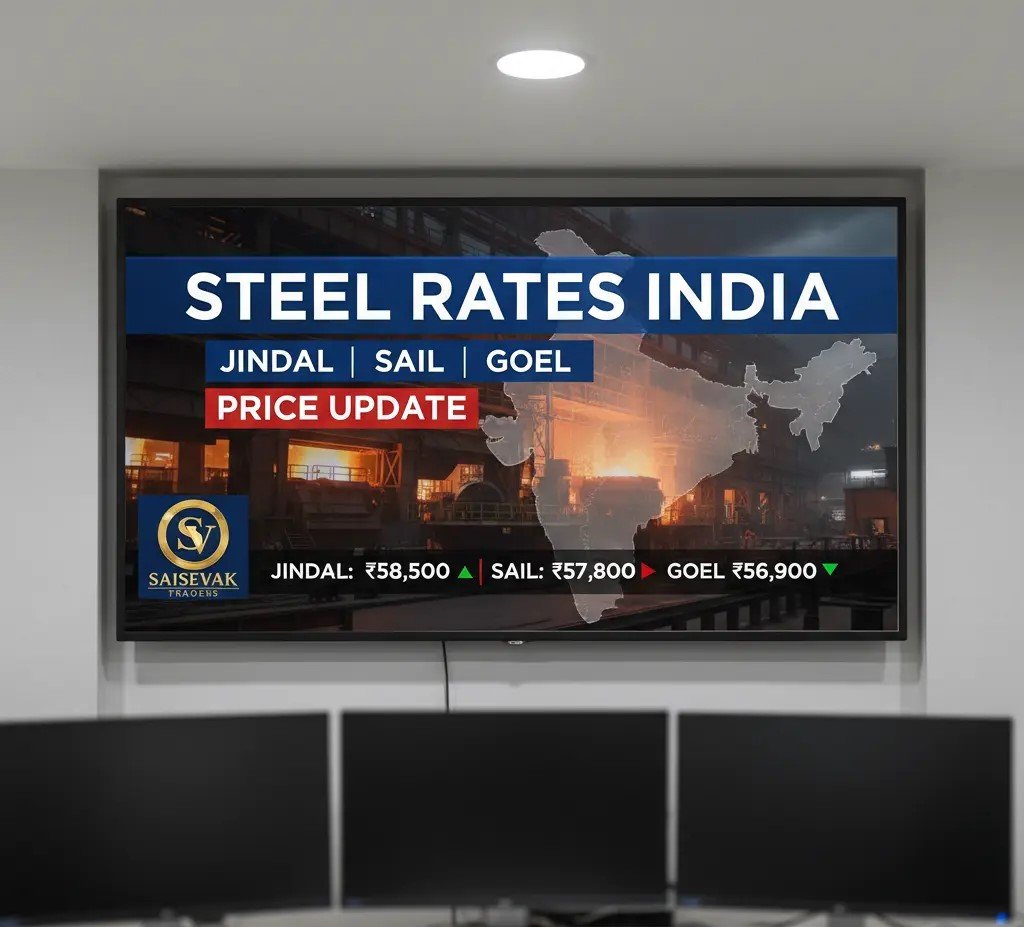
Final Thoughts
Understanding steel rates in India is about connecting global headlines to your local construction site. For brands like Jindal Panther, SAIL, and Goel TMT, the market dynamics of 2026 are a challenge they are navigating with strategic pricing. By focusing on trends rather than daily noise, appreciating regional differences, and using the right tools, you can transform from a passive observer into a confident, informed buyer. Remember, in a market that’s always moving, knowledge isn’t just power—it’s profit.
Frequently Asked Questions (FAQ)
Q1: What is today’s price for the Jindal Panther 12mm TMT bar?
Prices change daily by city and dealer. For the latest rate, contact an authorized Jindal Panther dealer or check a live steel market platform like SteelMint.
Q2: Steel price is dropping. Should I buy now for next year’s home construction?
If the price trend is genuinely down and your project is soon, it can be a good time. But for next year, full advance purchase may not be practical. Instead, ask your supplier if you can lock in a future rate.
Q3: Which is best for a new house: Jindal, SAIL, or Goel?
All are reliable. Jindal Panther and SAIL are top national brands. Goel offers strong value. Choose BIS-certified steel from a trusted dealer within your budget.
Q4: Why did steel prices increase last month?
Usually due to sudden market changes like higher coking coal prices, revised import duties, or increased demand from new infrastructure projects.
Q5: How do I avoid overpaying my steel supplier?
Compare quotes from at least 3 authorized dealers and check online price trends. This helps you negotiate and pay a fair market rate.
You Can Also Check Out: